
Atopic dermatitis, 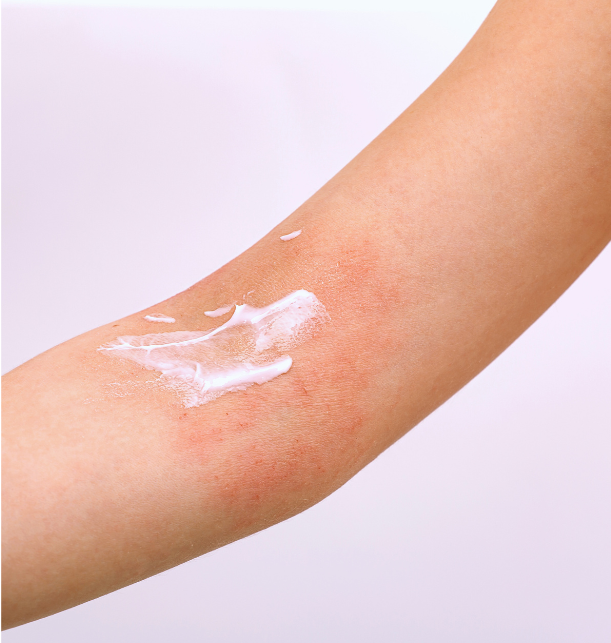 commonly known as eczema, is a chronic, non-contagious inflammatory skin condition that causes dry, itchy, and inflamed skin. Eczema most often begins during infancy or early childhood, with more than 90% of cases developing before age 5.
For many children, eczema symptoms improve or resolve during adolescence. However, some individuals continue to experience eczema into adulthood, while others may develop symptoms later in life. New-onset eczema after age 60 is uncommon and should prompt evaluation for other possible skin conditions.
If you or your child suffers from chronic eczema in Denton, Prosper, Argyle, Northlake, or the surrounding North Texas area, our Board-Certified Allergists can help identify triggers and develop an effective treatment plan.
Our allergists provide comprehensive eczema treatment for infants, children, teens, and adults throughout North Texas.
Comprehensive Eczema Care at
North Texas Allergy & Asthma Center
✔ Allergy skin testing
✔ Food allergy testing
✔ Patch testing
✔ Allergy shots/immunotherapy
✔ Dupixent, Adbry, Ebglyss, Nemluvio, and other advanced therapies
✔ Treatment for infants, children, and adults
Eczema Symptoms
Common symptoms of eczema include:
- Dry, itchy skin
- Red, brown, or inflamed patches of skin
- Cracked, rough, or thickened skin
- Oozing or crusting skin lesions
- Persistent scratching and irritation
Eczema is often described as an “itch-scratch cycle.” Itching leads to scratching, which damages the skin barrier and allows irritants, allergens, and bacteria to penetrate the skin more easily. This causes additional inflammation and itching, perpetuating the cycle. Over time, chronic scratching may cause the skin to become thickened, leathery, and discolored.
Distribution of Eczema by Age:
Infants and children younger than 2 years
- Face and cheeks
- Outer elbows
- Outer knees
Older children
- Elbow creases
- Behind the knees
- Feet and ankles
Teenagers and adults
- Hands
- Wrists
- Neck
- Face
- More widespread body involvement
Eczema can significantly affect quality of life. Sleep disruption, school absenteeism, reduced productivity, and emotional stress are common among patients and their families.
What Causes Eczema?
The exact cause of eczema is not fully understood. Current research suggests that eczema develops from a combination of genetic factors and environmental triggers.
Skin Barrier Dysfunction
Many individuals with eczema have mutations involving a protein called filaggrin. Filaggrin plays an important role in maintaining a healthy skin barrier.
When the skin barrier is weakened:
- Moisture escapes from the skin
- Dryness develops
- Irritants penetrate more easily
- Allergens trigger inflammation
- Skin infections become more common
Genetics and Family History
Children with a family history of eczema, asthma, allergic rhinitis (hay fever), or food allergies are at increased risk of developing eczema.
The Atopic March
Eczema may be the first step in a progression of allergic diseases known as the “atopic march.”
This progression often follows this pattern:
- Atopic dermatitis (eczema)
- Food allergies
- Allergic rhinitis (hay fever)
- Asthma
Studies show that up to 80% of children with eczema eventually develop asthma and/or allergic rhinitis later in childhood.
Common Eczema Triggers
Eczema triggers vary from person to person. However, common triggers include:
Allergens
- Pollen
- Dust mites
- Mold
- Pet dander
- Cockroach allergens
Irritants and Chemicals
- Soaps
- Detergents
- Cleaning products
- Fragrances
- Personal care products
Environmental Factors
- Heat
- Cold weather
- Low humidity
- Sudden temperature changes
Stress
- Physical stress
- Emotional stress
- Poor sleep
Identifying eczema triggers is an important step in reducing flare-ups and improving long-term control.
Food Allergies and Eczema
Most eczema is not directly caused by food allergies. However, food allergies may contribute to eczema symptoms in some children, particularly those with moderate-to-severe eczema, early-onset eczema, or a history of reactions to foods.
Common food allergens associated with eczema include:
- Milk
- Egg
- Soy
- Wheat
- Peanut
- Tree nuts
- Fish
- Shellfish
Because food allergies can sometimes contribute to eczema flare-ups, a comprehensive allergy evaluation may be beneficial for selected patients. Identifying and managing underlying food allergies may help improve eczema symptoms and overall quality of life in some individuals.
How Is Eczema Diagnosed?
Our board-certified allergists specialize in diagnosing and treating eczema in infants, children, and adults.
Diagnosis typically includes:
- Detailed medical history
- Family history review
- Physical examination
- Assessment of eczema severity and triggers
Allergy Testing for Eczema
Depending on the clinical history, testing may include:
Allergy Skin Testing
Many patients with eczema have underlying environmental allergies that can worsen their symptoms. Allergy skin testing can identify triggers such as:
- Dust mites
- Tree pollen
- Grass pollen
- Weed pollen
- Mold
- Pet dander
- Cockroach allergens
Identifying these triggers helps patients better avoid exposures and allows our allergists to determine whether allergy shots may be beneficial.
At North Texas Allergy & Asthma Center, allergy skin testing is performed in-office and provides results during your visit.
Food Allergy Testing
Food allergy testing is commonly performed using allergy skin testing and/or blood testing, depending on the patient’s history and symptoms.
Food allergy testing may be recommended when there is a history suggesting a possible food allergy or when eczema remains difficult to control despite appropriate treatment.
At North Texas Allergy & Asthma Center, we offer comprehensive food allergy evaluations, including allergy skin testing and blood testing when appropriate. Testing should always be interpreted in the context of a patient’s clinical history, as positive allergy tests do not always indicate a true food allergy.
Our board-certified allergists can help determine whether food allergies may be contributing to eczema symptoms, identify potential food triggers, and develop a personalized treatment plan tailored to your needs.
Patch Testing
Patch testing can help identify contact dermatitis and chemical sensitivities that may worsen eczema.
Laboratory testing is rarely required but may be used to exclude other conditions.
Eczema Treatment – Skin Care
Atopic dermatitis often requires a combination of treatment strategies. The foundation of eczema treatment is restoring and protecting the skin barrier.
Hydration and Moisturization
- Bathe in warm water for 5–10 minutes daily
- Use gentle cleansers such as Cerave, Vanicream, Dove or Cetaphil
- Pat skin dry immediately after bathing
- Apply moisturizer while skin is still damp
Emollients
Products containing petrolatum and other barrier-repair ingredients help lock moisture into the skin and reduce eczema flare-ups.
Moisturizers may need to be applied multiple times daily.
Bleach Baths
Talk with your North Texas Allergy & Asthma Center provider about whether bleach baths may be appropriate.
Research suggests that many patients with eczema have reduced skin microbiome diversity and increased colonization with Staphylococcus aureus bacteria. Bleach baths may help reduce bacterial overgrowth and improve eczema control in selected patients.
Eczema Treatment:
Over-the-Counter and Topicals
Additional eczema management strategies include:
- Keeping fingernails short
- Wearing loose-fitting cotton clothing
- Using fragrance-free detergents
- Avoiding harsh skin products
Antihistamines
Antihistamines may help reduce itching and improve sleep in selected patients.
Topical Steroid Prescription Creams
Topical corticosteroid creams and ointments remain an important treatment for active eczema flare-ups and skin inflammation.
Topical Non-Steroidal Prescription Creams
These include:
- Protopid (Tacrolimus)
- Elidel (Pimecrolimus)
- Eucrisa (Crisaborole)
- Zoryve (Roflumilast)
- Opzelura (Ruxolitinib)
These medications reduce inflammation by targeting specific immune pathways involved in eczema.
Treatment for Infections
For severe eczema flare-ups or skin infections, oral or topical antibiotics and, in some cases, oral corticosteroids may be prescribed.
Eczema Treatment: Oral and Injections
For patients whose eczema is not adequately controlled with topical therapies, advanced treatment options are available.
Allergy Immunotherapy
Many patients with eczema also have environmental allergies such as dust mites, pollen, mold, or pet dander. These allergies can worsen skin inflammation and contribute to eczema flare-ups.
Allergy immunotherapy, commonly known as allergy shots, may help improve eczema symptoms by reducing the immune system’s sensitivity to environmental allergens such as dust mites, pollen, mold, and pet dander.
Potential benefits of allergy shots include:
- Fewer eczema flare-ups
- Reduced itching
- Less reliance on topical steroid creams
- Improved allergy and asthma symptoms
- Long-term modification of allergic disease
Unlike medications that only treat symptoms, allergy shots work to address the underlying allergic response. Treatment is customized based on allergy skin testing results and is typically administered over several years.
At North Texas Allergy & Asthma Center, we offer comprehensive allergy skin testing and allergy shot programs for children and adults throughout Denton, Prosper, Argyle, Northlake, and Gainesville.
Biologics
Biologics are injectable medications that target specific parts of the immune system to block the underlying inflammation that causes moderate to severe eczema. Unlike traditional broad-acting treatments, these precision therapies are designed to provide long-term relief when standard creams and oral drugs are ineffective.
Dupixent (Dupilumab)
Blocks IL-4 and IL-13 and is approved for patients 6 months of age and older.
Adbry (Tralokinumab)
Blocks IL-13 and is approved for patients age 12 and older.
Ebglyss (Lebrikizumab)
Also targets IL-13 and is approved for patients age 12 and older.
Nemluvio (Nemolizumab)
Blocks the IL-31 receptor and is approved for patients age 12 and older.
JAK Inhibitors
Selective Janus kinase (JAK) inhibitors provide another treatment option for moderate-to-severe eczema. Available medications include:
Oral JAK Inhibitors
- Cibinqo (Abrocitinib)
- Rinvoq (Upadacitinib)
Topical JAK Inhibitor
- Opzelura (Ruxolitinib)
These medications often provide rapid symptom improvement but require careful patient selection and monitoring because of potential risks including:
- Serious infections
- Cardiovascular events
- Blood clots
- Cancer
- Other significant adverse effects
Your allergist can help determine whether these medications are appropriate for your situation.
When Should You See an Allergist ?
You should consider seeing an allergist if:
- You are interested in allergy skin testing or allergy shots (allergy immunotherapy) to identify and treat underlying allergy triggers
- Eczema is affecting your quality of life
- Symptoms interfere with sleep
- Frequent flare-ups occur
- Over-the-counter treatments are not working
- Food allergies may be contributing
- You require repeated steroid treatments
- Skin infections are recurring
At North Texas Allergy & Asthma Center, our board-certified allergists specialize in diagnosing and treating eczema in infants, children, teenagers, and adults. We provide personalized treatment plans designed to identify triggers, reduce flare-ups, and improve long-term skin health.
We proudly serve patients from Denton, Prosper, Argyle, Northlake, Gainesville, and surrounding North Texas communities.
Whether you are struggling with chronic itching, recurrent eczema flare-ups, suspected food allergies, or environmental allergies that may be worsening your skin symptoms, our board-certified allergists can help. We offer allergy skin testing, food allergy testing, patch testing, allergy shots, biologic therapies, and personalized eczema treatment plans for patients of all ages.
Call our office at 940-382-4142 and schedule an appointment at our Denton North, Denton South, Prosper, Argyle/Northlake, or Gainesville office today – we’re here to help make you feel better!
SHIKHA MANE, MD
Board Certified Allergist