
Fall in North Texas brings cooler temperatures, football season… and a familiar question for many allergy sufferers: “Are these allergies, or am I getting sick?” 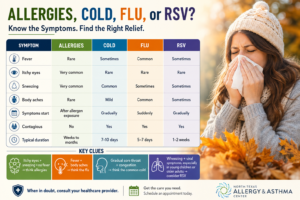
It can be surprisingly difficult to tell the difference between allergy symptoms and respiratory illnesses like the common cold, influenza (flu), and RSV. This is especially true in North Texas, where fall allergy season overlaps with the time of year when respiratory viruses become more common.
Although allergies, colds, flu, and RSV have different causes, they can all irritate the nose and airways, leading to similar symptoms such as:
- Congestion
- Runny nose
- Sneezing
- Cough
- Fatigue
- Headache
Although these conditions share many symptoms, a few key clues can help you tell them apart. Understanding the difference can help you choose the right treatment, know when to seek medical care, and avoid spreading contagious illnesses to others.
| Symptom | Allergies | Cold | Flu | RSV |
| Fever | Rare | Sometimes | Common | Sometimes |
| Itchy eyes | Very common | Rare | Rare | Rare |
| Sneezing | Very common | Common | Sometimes | Sometimes |
| Body aches | Rare | Mild | Common | Sometimes |
| Symptoms start | After allergen exposure | Gradually | Suddenly | Gradually |
| Contagious | No | Yes | Yes | Yes |
| Typical duration | Weeks to months | 7-10 days | 5-7 days | 1-2 weeks |
Is It Allergies or Something Else?
Allergy symptoms can occur during every season because different pollens peak throughout the year, while indoor allergens such as dust mites and pet dander can cause symptoms year-round. In North Texas, is one of the most common causes of fall allergy symptoms, although mold spores may also increase after periods of rain.
Common Symptoms:
- Sneezing
- Clear runny nose
- Nasal congestion
- Itchy nose
- Itchy eyes
- Watery eyes
- Postnasal drip
Usually NOT present:
- Fever
- Significant body aches
- Chills
Clues that your symptoms may be due to allergies:
- Often occur after outdoor exposure
- Worsen during pollen season
- Improve indoors (or, if you have an allergy to pets or dust mites, you may experience more symptoms after sleeping in bed, or when interacting with a pet)
- Symptoms may persist for weeks or months, especially if exposure to the allergen continues
Some people are allergic to only one or two triggers and notice symptoms during a specific season. Others are allergic to multiple pollens or indoor allergens and experience symptoms throughout much of the year. Allergy testing can help determine your specific triggers, how to reduce exposure, and guide a personalized treatment plan.
Is It a Common Cold?
The common cold can be caused by more than 200 different viruses, most commonly rhinoviruses. Symptoms usually develop gradually over 1-3 days.
Typical symptoms:
- Sore throat is often the first symptom
- Runny nose
- Congestion
- Mild cough
- Mild fatigue
While colds are contagious, they usually improve within 7-10 days and don’t require antibiotics. Supportive care and time are appropriate treatment for colds.
Supportive care for upper respiratory symptoms includes:
- Increase rest and hydration
- Eat soft foods if you have sore throat
- Tylenol and ibuprofen (unless you cannot take these for a medical reason) for fever and body aches
- Warm showers or using a cool-mist humidifier may help relieve congestion
- Saline sinus rinses and saline sprays to help clear congestion
- OTC decongestants
- Oral decongestants are found behind the pharmacy counter and can cause jitteriness, insomnia, and high blood pressure. They are for short term use only.
- Nasal decongestants, such as sprays with oxymetazoline, are only to be used for a short time- no longer than 72 hours as using them longer term can result in “rebound congestion” which worsens your symptoms.
- Cough drops
- Honey (for adults and children over 1 year of age)
Could It Be the Flu?
Influenza (commonly called “the flu”) is a viral illness that is highly contagious and most commonly active from fall through winter. The best way to reduce your risk of severe illness from the flu is by getting your annual flu shot. Frequent handwashing and staying home when sick can also help reduce transmission.
Common Symptoms:
- Sudden onset
- Fever
- Chills
- Significant body aches
- Severe fatigue
- Headache
- Dry cough
A common feeling that patients describe when they get the flu is feeling like they were “hit by a truck” of symptoms. Along with supportive care, antiviral medications are available for the treatment of the flu, however they work best when started within 48 hours of symptom onset.
Could It Be RSV?
Although we historically think of Respiratory Syncytial Virus (RSV) as a virus that affects infants and young children, RSV can also cause serious illness in older adults, people with chronic lung disease, and those who are immunocompromised.
Common Symptoms:
- Congestion
- Persistent cough
- Wheezing
- Fever
- Shortness of breath
RSV commonly affects the lower airways, making wheezing and shortness of breath more likely than with a typical common cold.
When Do I Need Antibiotics?
While allergies and the viruses listed above will not improve with antibiotics, these conditions can sometimes make it easier for bacteria to cause a secondary infection. For example, while allergies themselves don’t cause infections, swelling and mucus buildup can block sinus drainage and increase the risk of a bacterial sinus infection forming.
Secondary bacterial pneumonia can sometimes develop after the flu or RSV. If symptoms persist for longer than 10 days without improvement, improve and then worsen, or become unusually severe, you should be evaluated by your healthcare provider to see if your condition requires antibiotics.
Additionally, there are some warning signs that warrant a trip to the emergency department:
- Difficulty breathing
- Chest pain
- High fever that won’t improve
- Blue lips
- Confusion
- Oxygen saturation less than 90%
- Asthma symptoms not responding to rescue medication
- Inability to keep fluids down
Can You Have Allergies and a Virus at the Same Time?
Yes. Having seasonal allergies doesn’t protect you from catching a cold, the flu, or RSV. In fact, allergy symptoms may make it more difficult to recognize when you’ve also developed a viral illness. If your usual allergy symptoms suddenly worsen and include new symptoms such as fever, fatigue, chills, or body aches, you may have developed a viral illness in addition to your allergies.
Can Allergies Cause a Fever?
No. Allergies are caused by your immune system reacting to harmless substances, not by an infection. Because allergies are not caused by an infection, they typically do not cause fever, although they may leave you feeling tired or run down.
The Bottom Line
Because allergies, colds, influenza, and RSV share many symptoms, it isn’t always easy to know what is causing you to feel sick. Fortunately, a few hallmark symptoms can help point you in the right direction:
- Itchy eyes + sneezing + no fever ” think allergies
- Fever + body aches ” think the flu
- Gradual sore throat + congestion ” think the common cold
- Wheezing + viral symptoms, especially in young children or older adults ” consider RSV
When Should You See an Allergy Specialist?
You should seek an allergy evaluation if:
- Symptoms persist for weeks or keep coming back
- Symptoms return at the same time each year
- You frequently develop sinus infections
- Your symptoms trigger asthma flares
- You’re unsure whether symptoms are allergies or recurring illness
If you’re experiencing recurring allergy symptoms, seasonal congestion, frequent sinus infections, or asthma flare-ups, the board-certified allergists at North Texas Allergy & Asthma Center can help. We offer comprehensive allergy testing and personalized treatment plans to help patients throughout North Texas find lasting relief. Schedule your appointment today to get started.
Michelle Walker, FNP-BC, CCRN and Hana M. Tartibi, MID