
 Holidays are a time to get together with family and friends, enjoy favorite traditions, and, of course, share some delicious food. But if you or your child has a food allergy, holiday gatherings can also bring some extra stress. New recipes, potluck dishes, and large gatherings can make it difficult to know exactly what is safe to eat.
Food allergies affect millions of Americans and can cause reactions ranging from mild to life-threatening anaphylaxis. With some planning and preparation, however, having a food allergy does not mean your family has to miss out on holiday celebrations. These tips can help you and your family enjoy a safer and happier holiday season.
Understanding Food Allergies
Food allergies and food intolerances are not the same thing. A food allergy occurs when the immune system mistakenly identifies a food protein as harmful and reacts to it. These reactions can range from mild to severe and may include hives, swelling, vomiting, difficulty breathing, or anaphylaxis.
Food intolerances, on the other hand, do not involve the immune system in the same way. A common example is lactose intolerance, which can cause digestive upset or diarrhea after consuming milk products.
The FDA recognizes nine major food allergens:
- Milk
- Eggs
- Peanuts
- Tree Nuts
- Soy
- Wheat
- Sesame
- Fish
- Crustacean shellfish
Food allergies should be properly evaluated and diagnosed by a medical professional. A board-certified allergist can help determine whether your symptoms are consistent with a food allergy, identify triggers, and develop an individualized action plan.
Learn to Read Labels
Learning how to read food labels is an important part of keeping someone with food allergies safe. If you are attending a family event and your loved ones want to make sure they are making safe food, you can help them learn how to read labels as well!
- Read the entire ingredient list every time. Sometimes ingredients and formulations of pre-packaged food change, even for foods you’ve safely consumed before
- Look for a “contains” statement, but don’t rely on it alone. Always check the full ingredient list.
- If you’re unfamiliar with an ingredient, look it up. Some ingredients may contain an allergen even if it isn’t obvious from the food’s name.
- Remember that precautionary statements are voluntary, so their absence does not necessarily mean a food is free from cross-contact risk. Examples of these statements include “may contain…” or “processed in a facility that also processes….”
- When in doubt, leave it out. If you cannot confirm that the food is safe, choose another option.
Pack a Food Allergy Emergency Kit
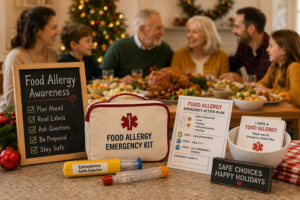
Even with careful planning, it is important to always be prepared for the possibility of an allergic reaction. Before heading to Thanksgiving dinner, a holiday party, or any celebration involving food, make sure you have your emergency kit ready.
Your food allergy emergency kit should include:
- Your prescribed epinephrine device or auto-injector
- A copy of your food allergy emergency action plan
- Antihistamines and any other medication recommended by your allergist. Note that antihistamines are not a replacement for epinephrine in the event of a serious allergic reaction.
- A phone that can be used to call 9-1-1 if needed
- Backup epinephrine, if your allergist has recommended carrying more than one dose
Make sure you check the expiration dates of your medicines and epinephrine routinely. Also ensure that these medications have been stored correctly to avoid loss of potency. Your epinephrine device should be easily accessible, and you should always know where it is when you are near food.
It is also a good idea for several responsible adults to know the emergency action plan, where the epinephrine device(s) are, and how to use them. Plan ahead with your family, friends, or child’s teacher to make sure that everyone is on the same page.
Help Your Child Feel Included
Children with food allergies may sometimes feel left out when they see friends or family members enjoying foods they cannot eat. Parents can help by focusing on preparation, confidence, and inclusion.
You can help your child by:
- Teaching them what’s safe to eat. As they get older, help them learn to recognize their allergens, ask questions, and make safe choices.
- Giving them safe options. Having a special treat or food that they know they can safely enjoy will help make them feel included.
- Avoiding unnecessary restrictions. As long as you take proper precautions, children with food allergies can participate in many of the same activities as their friends.
Having a food allergy does not define your child. While they may need to take extra precautions, a food allergy does not have to prevent your child from enjoying a happy and safe holiday season.
Communicating With Family and Friends
Don’t be afraid to talk about food allergies before the holiday gathering to make things less stressful.
Before the event:
- Tell the host about the food allergy in advance.
- Let the host know what the allergen is and which precautions are needed.
- Talk about cross-contact. Prep stations, countertops, serving utensils, cutting boards, and cooking equipment are all common sources of cross-contact.
- Ask questions about recipes and ingredients. Many people may overlook sauces, seasonings, desserts, and prepared foods without double checking that they are allergen-free.
- When in doubt, bring your own food! Ask the host if they can set aside an area to serve food you know is allergen free to help you or your child have a less stressful eating experience.
Many times, friends, family members, and teachers are happy to help once they understand what is needed to keep someone with a food allergy safe.
Celebrating the Holidays with Food Allergies
Advanced planning can help prevent last-minute stress during holiday celebrations.
Consider these strategies:
- Offer to host when possible as this gives you more control over ingredients and food preparation.
- When attending a potluck, bring several safe dishes and your own serving utensils to prevent potential cross-contact.
- Make sure you and your child know which foods may not be safe. If you didn’t help prepare it, then assume it is not safe unless you can confirm ingredients and preparation methods.
- Send a safe treat with your child to any school parties. This gives them an option they know they can enjoy if they cannot eat any of the food available at the party.
- Review the plan with your child before an event. Discuss what foods are safe, what they should do if they are unsure about a food, and where their emergency medication will be.
- Family traditions don’t always have to revolve around food! Some ideas include reading a special book, volunteering together, watching holiday movies, and making decorations.
It can be overwhelming to think about holiday meals and get-togethers when you or your child has a food allergy. However, preparation and communication can make these celebrations so much easier.
If you’re ready to take the first step in managing your child’s food allergies, consider consulting with an allergist. At North Texas Allergy & Asthma Center, our board-certified allergists can provide a comprehensive food allergy evaluation and help develop an individualized treatment and management plan for your family.